

(26 March, 2025), PHDEC organized a webinar on the topic of “Cherry Orchard Management Techniques (GAP) for Premium Quality & High Yield”. The cherry blossom season in regions like Hunza, Gilgit, Skardu, Ghizar, Quetta, Pishin, Ziarat, Kalat, Zhob, Mastung, Loralai, Swat & Chitral usually starts around March and extends into April. So, keeping in view the ongoing cherry blossom season and upcoming fruiting season of the product, PHDEC chose this time frame to educate the cherry farmers/growers, key farm workers on the subject. Mr. Zulfiqar Ali Ghazi, Value Chain Expert in horticulture products especially in cherry sector of GB was invited to enlighten the small holders of cherry on Integrated Pest and Disease Management, Pruning and Canopy Management, Disposal of Infected Plant Material, Post-Harvest Activities & Overview of GAP certification process for premium quality yield.

March 20, 2025, PHDEC conducted a webinar on “Panama Disease of Banana: Advancing Knowledge and Research for Sustainable Disease Management Solutions.” The webinar aimed to educate growers and farmers about Panama wilt disease, its symptoms, and effective management strategies.Panama disease is a highly destructive fungal disease that poses a significant threat not only to Pakistan’s banana industry but also to major banana-producing countries worldwide. Farmers require comprehensive guidelines to identify, diagnose, and manage the disease using recommended agricultural practices.To address this critical issue, PHDEC engaged experts from Sindh Agriculture University, Tandojam, who have conducted extensive research on Panama wilt disease. Dr. Rehana Naz Syed, Professor, Department of Plant Protection, Sindh Agriculture University, delivered a detailed presentation on banana orchard management, Panama wilt disease, its symptoms both external and internal, and its control measures.She emphasized that there is no cure for Panama disease once it infects a field, as it is a soil-borne disease. The only effective approach is to remove and destroy infected plants to prevent further spread. Therefore, she stressed to keep monitoring and be vigilant to identify the disease. Dr. Syed shared a standardized protocol for managing Panama disease, which includes:
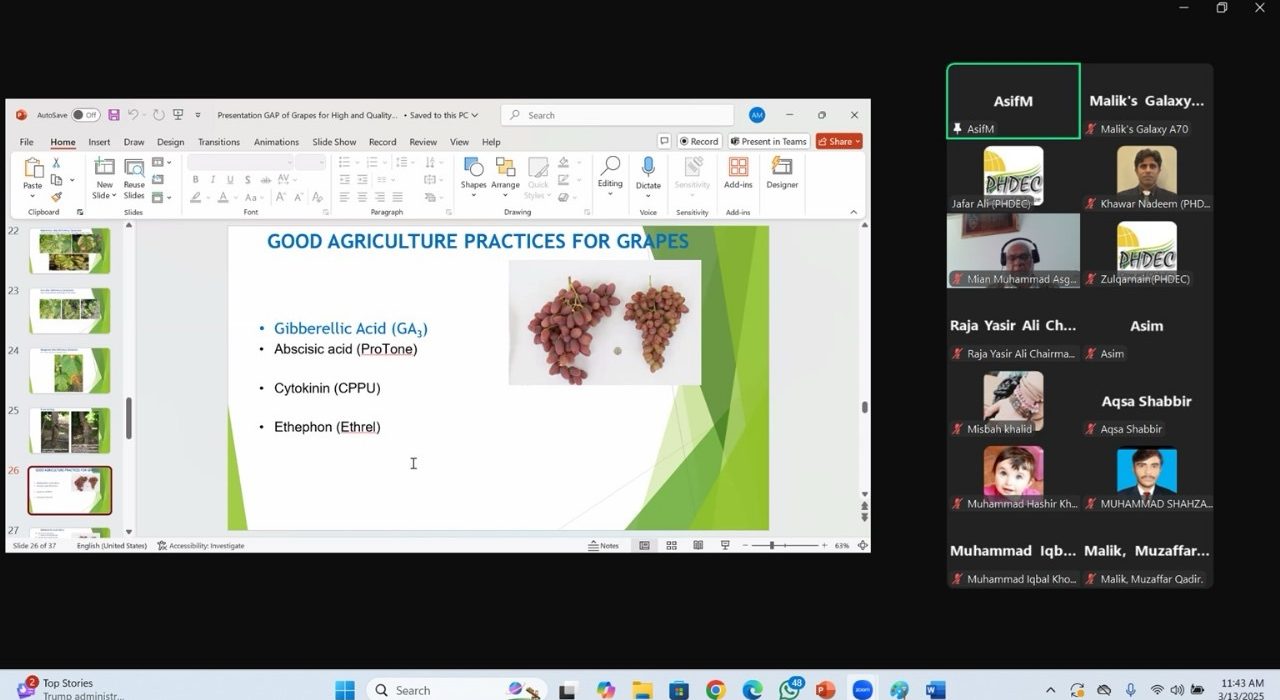
Today (13 March, 2025) PHDEC, organized a webinar on the topic of “Grapes Orchard Management for Better Quality and High Yield” in collaboration with FAO Balochistan.Grape’s cultivation has gained momentum in Pakistan due to its adaptability to diverse climatic conditions. Grapes thrives in tropical climates, making it suitable for different regions of the country. Grapevines typically flower in the spring, from mid of the march to late may (depending on locality & grape’s variety). This happens when average daily temperatures are between 59 and 68 °F.Keeping in view the above, PHDEC conducted a webinar on Grapes Orchard Management. The objective of the webinar was to guide farmers about orchard management of grapes crop for upcoming season to get maximum & better-quality yield.The expert from FAO Balochistan, guided the participants on area/site selection, grapes variety selection, modern production technologies, trenches vs trellis system, pruning methods for grape vines, agronomic practices & soil management.

PHDEC, in collaboration with CEFORT (Chakwal), organized an Interactive Session for Olive Growers.The session provided growers with an opportunity to directly engage with experts and seek guidance on various aspects of olive cultivation and management.Olive cultivation in Pakistan began in 1991 with a few hundred plants and has now successfully expanded to approximately 51,000 acres with approximately 6.3 Million plants. The country has huge potential for olive production, with around 10 million acres of land suitable for cultivation, almost twice the area of Spain, the world’s largest olive oil producer. Currently, Pakistan produces about 861 tons of table olives annually, all of which are consumed domestically. With a vision to enhance self-sufficiency, Pakistan has set a target of producing 4,600 tons of olive oil by 2030 to reduce its reliance on imports. The key regions suitable for olive cultivation include Balochistan, Khyber Pakhtunkhwa (KPK), Punjab, Azad Jammu & Kashmir (AJK), and Gilgit-Baltistan (GB).Recognizing the vast potential of this crop and to better understand and address the real-time challenges faced by olive growers in various regions of Pakistan, PHDEC has organized this interactive session, bringing together olive experts to provide guidance and solutions to growers and stakeholders. The experts from CEFORT provided in-depth insights into advanced olive production technologies, helping growers enhance their orchard management practices.During the session, participants also expressed interest in learning about export procedures for olive oil and other value-added products. In response, PHDEC plans to organize future webinars and workshops focusing on export regulations, branding, certification, and related aspects to support and empower stakeholders in the olive sector.
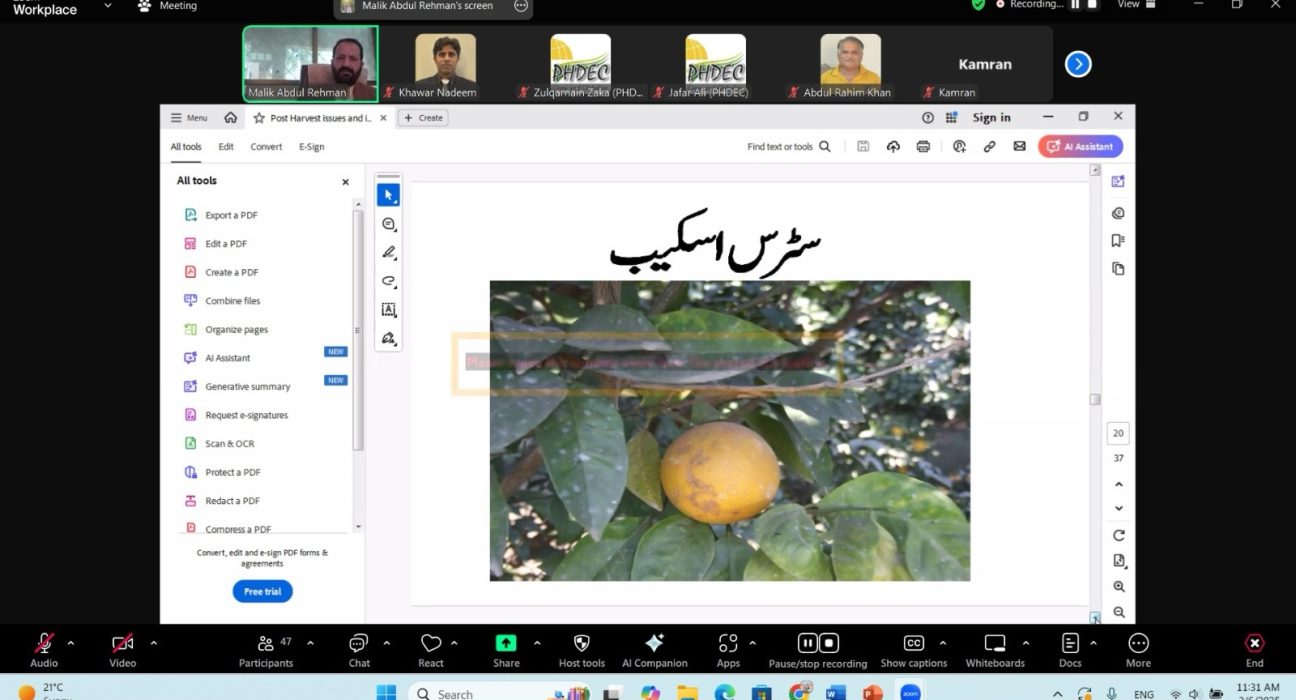
Postharvest Management of Citrus Orchards Today (06 March 2025), PHDEC conducted a webinar on the “Postharvest Management of Citrus Orchards” to enhance yield and improve fruit quality. Citrus holds a significant position in Pakistan’s fruit production, with an annual output of approximately 2.4 million metric tons (MMT). Kinnow remains the dominant variety grown in the country. However, Kinnow exports have been declining due to quality concerns and low yields, largely attributed to insect and pest infestations and a lack of awareness among farmers regarding good agricultural practices.As the current harvest season nears its conclusion, it is crucial to begin orchard preparations for the next crop to ensure better yield and quality. In this context, PHDEC organized this important webinar, featuring citrus experts from the Citrus Research Institute (CRI) to train farmers on effective orchard management techniques.Mr. A. Rehman, Senior Scientist at CRI, delivered a comprehensive presentation, guiding farmers on orchard pruning and sharing a detailed plan for insect, pest, and disease control. He emphasized the need for vigilance against pest attacks, explaining their symptoms, timing, and preventive measures. He also shared a detailed plan for nutrition and irrigation management of whole year.The session concluded with a Q&A segment, where participants appreciated PHDEC’s timely efforts in building their capacity and supporting the citrus industry.

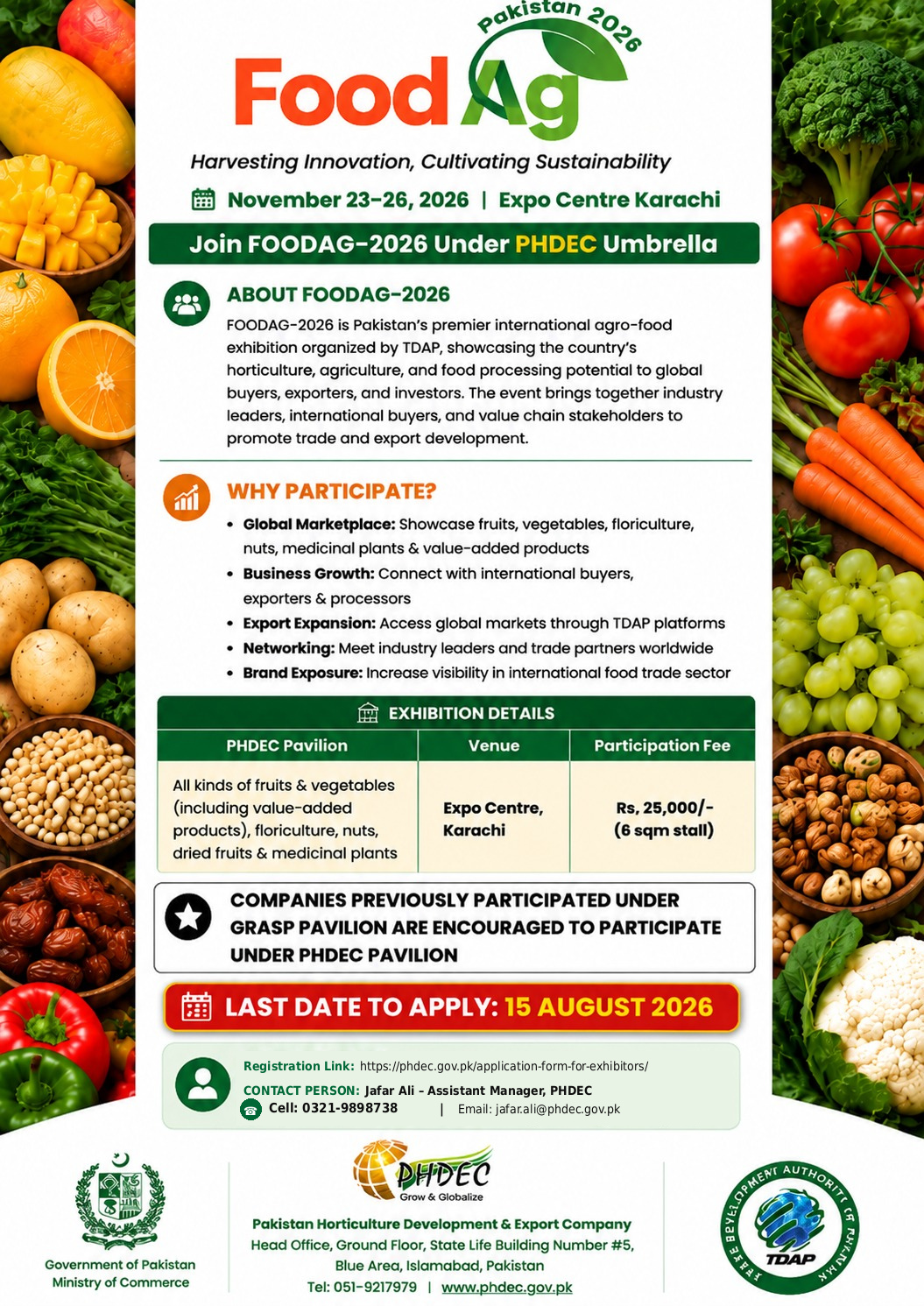
PHDEC’s Pavilion at FoodAg Manufacturing 2025 Organized by TDAP Day 1 Highlights Event Gallery Day 2 Highlights Event Gallery Day 3 Highlights Event Gallery
Day 3 Successful Conclusion of FoodAg Manufacturing Expo at Expo Center LahoreThe third and final day of the FoodAg Manufacturing Expo at Expo Center Lahore concluded with great enthusiasm, leaving the horticulture sector stakeholders hopeful and appreciative of PHDEC’s ongoing commitment to uplifting the industry.As part of this commitment, PHDEC sponsored 50 stalls for value-added companies, providing them with a unique opportunity to engage with both local and international buyers. Exhibitors also gained valuable insights into modern packaging techniques, international quality benchmarks, ingredient composition, cosmetics, and advanced packaging solutions. Additionally, they explored state-of-the-art machinery used globally for value addition in the horticulture sector.The three-day exhibition boosted the morale of horticulture entrepreneurs and stakeholders, motivating them to work towards meeting international market standards. PHDEC remains dedicated to creating such milestones and will continue to provide platforms that empower the sector, ensuring its growth and global competitiveness.
Copyright ©2024 Pakistan Horticulture Development and Export Company (PHDEC). All Rights Reserved